
Orforglipron Capsule Doses vs. Tablet Strengths: Why Do the Numbers in Studies and Product Labels Differ?
In this article
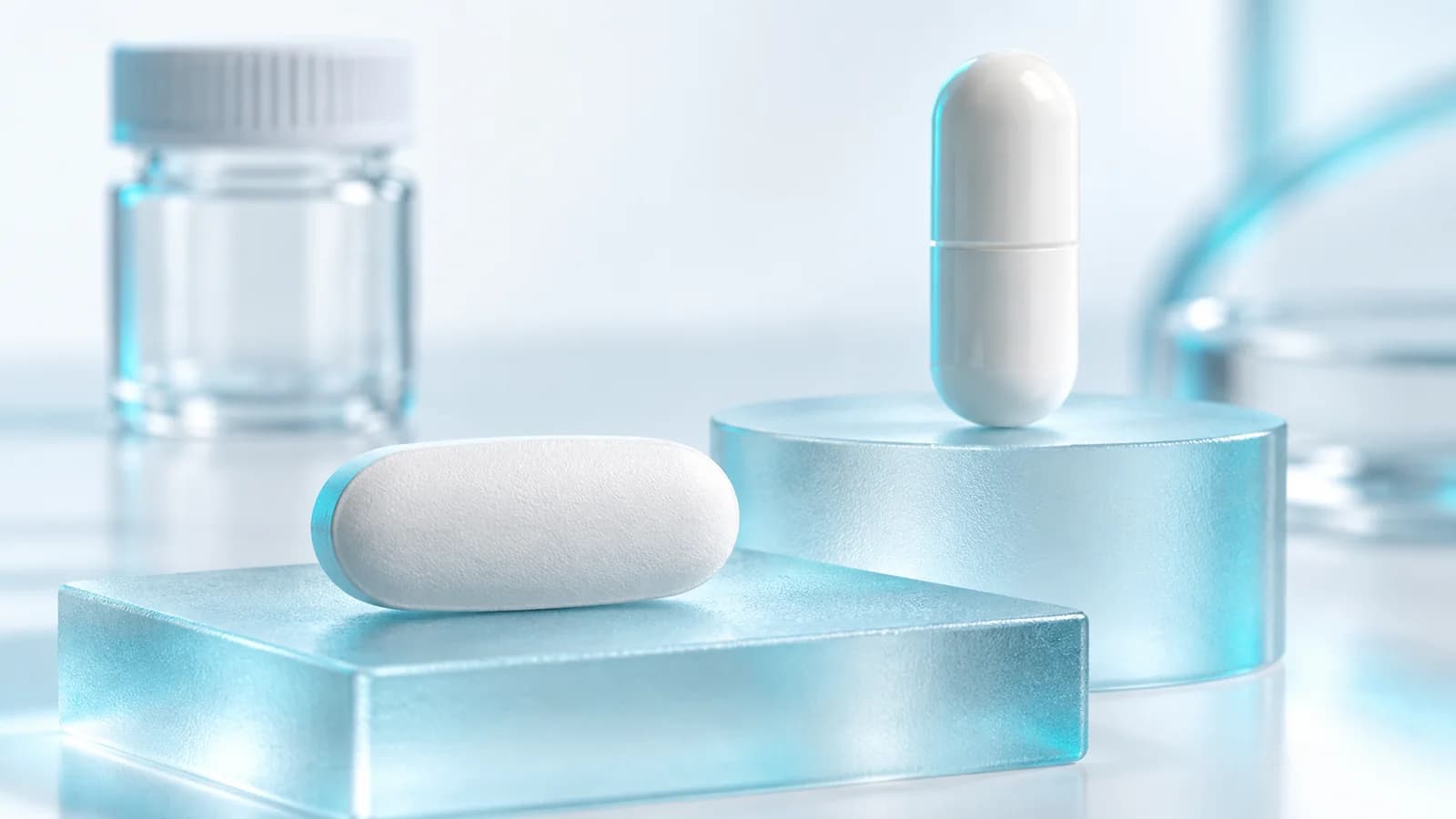
If you have been following the latest advancements in frontier metabolic small molecules, you have likely noticed a glaring discrepancy regarding Orforglipron. In early clinical trial papers, researchers cite daily capsule doses like 12 mg or 36 mg. Yet, as commercial approvals (such as the recent UK launch under the brand name Foundayo) hit the market, the approved tablet strengths look completely different—for example, 9 mg and 17.2 mg.
For clinic owners, peptide resellers, independent researchers, and informed buyers, this raises an immediate question: Are these different strengths due to the delivery method, a change in the active molecule, or something else entirely?
At Azurpep, a leader in Frontier Metabolic Small Molecules & Peptide Formulations, we believe in radical transparency. Here is the scientific breakdown of why clinical trial capsule numbers and commercial tablet labels differ, and what it means for your research and formulations.
The Core Answer: Formulation Evolution and Bioavailability
When transitioning a drug from a clinical trial phase to a mass-produced commercial product, the physical and chemical environment of the active pharmaceutical ingredient (API) is often heavily optimized. The difference between a 36 mg clinical capsule and a 17.2 mg commercial tablet comes down to three primary factors:
1. Bioavailability and Delivery Mechanisms
Clinical studies often utilize simple capsule formulations to test safety and efficacy quickly. However, oral peptides and small-molecule GLP-1 receptor agonists face a hostile environment in the human stomach.
By the time a product reaches commercial scale as a tablet, pharmacologists have engineered advanced excipient delivery systems (such as specific absorption enhancers or pH modifiers). A highly optimized commercial tablet can achieve the same systemic exposure (AUC and Cmax) with 17.2 mg of the active ingredient as a basic capsule formulation did with 36 mg. You are not getting "less" of the drug's effect; the delivery vehicle has simply become far more efficient at crossing the gastric barrier.
2. Active Moiety vs. Salt Form Measurements
In clinical literature, dosages are sometimes reported based on the weight of the salt form or solvate of the molecule used in the lab. When regulatory agencies approve a commercial label, they often require the dosage to be listed strictly as the weight of the active free base moiety. If the salt or solvate makes up a significant percentage of the compound's total molecular weight, stripping that out of the label calculation will result in a lower milligram number, even if the absolute number of active molecules per dose is identical.
3. Bridging the Titration Gap
As observed in recent community discussions, trial participants transitioning from injectable GLP-1s (like Tirzepatide or Semaglutide) to oral Orforglipron were often switched to a 12 mg capsule—which is pharmacokinetically equivalent to the commercial 9 mg tablet—before titrating up to the maximum dose. The varied titration steps (0.8 mg, 2.5 mg, 5.5 mg, 9 mg, 14.5 mg, and 17.2 mg) reflect a highly refined commercial dosing schedule designed to mitigate gastrointestinal side effects better than the broader jumps used in early capsule trials (1, 3, 6, 12, 24, 36 mg).
Implications for Researchers, Clinics, and Resellers
Understanding these pharmacokinetics is vital if you are formulating, researching, or distributing metabolic small molecules. Whether you are dealing with oral non-peptides like Orforglipron or injectable peptide powerhouses, precision is everything.
For clinics and beauty salon owners expanding their weight-management portfolios, offering accurate information on dose equivalency builds unmatched trust with your clientele.
Sourcing Frontier Molecules with Azurpep
As a manufacturer with years of production and global export experience, Azurpep bridges the gap between raw laboratory research and premium commercial-grade distribution. We specialize in providing high-purity, meticulously synthesized metabolic compounds tailored to the rigorous demands of researchers and wholesale distributors.
Beyond Orforglipron, our comprehensive Product Catalog features the most sought-after metabolic targets in the industry:
- Retatrutide (Triple G agonist for unparalleled metabolic research)
- Cagrilintide (Amylin analog often researched alongside GLP-1s)
- 5-Amino-1MQ (NNMT inhibitor targeting cellular metabolism)
Why Partner with Azurpep?
- Uncompromising Quality: Every batch is backed by rigorous testing. Verify our COAs here to explore our stringent Quality Control standards.
- Built for Business: We support entrepreneurs, clinics, and resellers with comprehensive Wholesale & Private Label services. Benefit from our low Minimum Order Quantities (MOQ), custom packaging, and hassle-free DDP express shipping.
- Bespoke R&D: Require something off-catalog? Explore our Custom Peptide Synthesis capabilities.
Elevate Your Product Line Today
Are you ready to secure high-purity Orforglipron or expand your private label metabolic portfolio?
- Request a Quote for bulk pricing.
- Need immediate assistance? Connect with our experts via our Live Sales Chat or visit our Contact Page.
Stay at the forefront of metabolic science with Azurpep—where frontier research meets commercial reliability.